
Stormwater Cost Share
Contain the Rain – Stormwater Cost Share Program
Overland Park’s stormwater cost share program encourages residents and business owners to incorporate stormwater management strategies on their properties, reduce stormwater runoff and improve water quality.
Overland Park budgets funds for the cost share program to help offset the costs of stormwater management projects that capture, slow down or soak up stormwater close to where it falls.
Funding is available to applicants on a first-come, first-served basis, upon project completion, and is subject to the approval of the Public Works Department. Projects that are already required by the City’s building and construction codes to treat stormwater will not receive funding. Applicants are responsible for ensuring projects follow City ordinances and meet homeowners association requirements (if applicable).
Apply
Applications for the 2026 Stormwater Cost Share program are open!
The application window remains open until Oct. 30, or until all funds are allocated. To apply, you need :
- A map showing the location of the project site,
- Summary of the project,
- List of plants/trees you would like to use
- And an estimated cost for the project.
After submitting your application, please wait for an email confirmation and approval from City staff before you begin any work. Upon completion of the project, share your before-and-after photos and your itemized receipts with us.
To receive your reimbursement, you must complete and submit your approved projects by Nov. 16.
Eligible Projects
The City will help cover the costs of materials and contractor labor to install many stormwater treatment projects (limit of one project per household, per year). Residents may be reimbursed for the purchase of certain native plants using the cost-share program. Any native plants not currently listed below must receive approval prior to purchase to ensure reimbursement.
- Dry Well/Seepage Pits
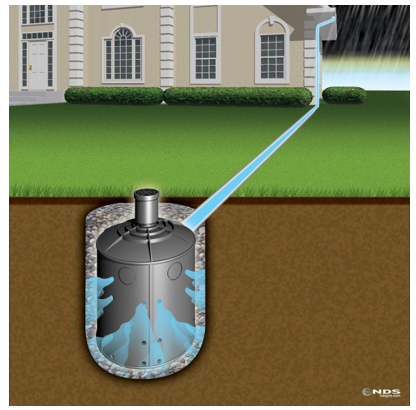
A dry well, also called a seepage pit, is an underground storage facility that temporarily stores stormwater runoff. Pipes installed to drain water from roof gutters can directly connect to the dry well, which may be a gravel-filled pit, a prefabricated storage chamber made from plastic, concrete or a pipe segment. Runoff flows into the dry well and slowly drains or infiltrates into the surrounding soil. In the event of a heavy storm or frequent storms, an overflow pipe is used to ensure any additional runoff is safely directed downstream.
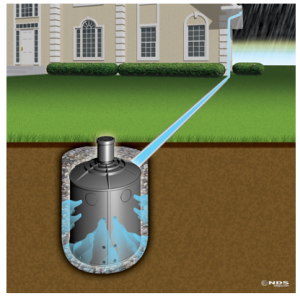
Overland Park will cover 50 percent of the cost of a dry well or seepage pit, up to $500.
- Floating Wetlands
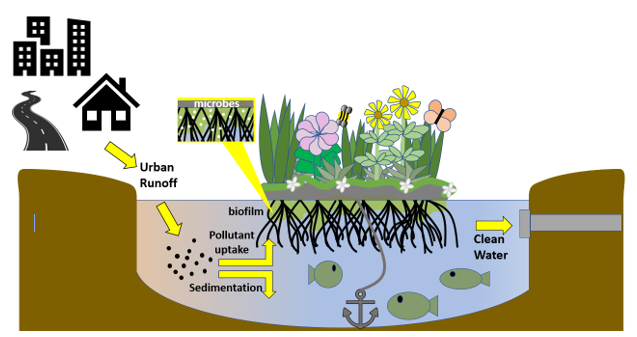
Floating wetlands are platforms designed to support the growth of aquatic and terrestrial plants on the surface of a water body. Unlike traditional wetlands, where plants are rooted in the bottom soil, these systems allow plants to grow hydroponically, with their roots extending directly into the water column.
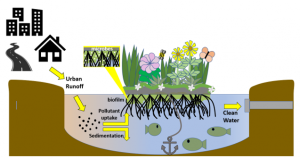
Overland Park will reimburse 50 percent of the cost, up to $1,000.
- Food Forest
An area planted with a minimum of four food-producing, woody plants from the list below.
Overland Park will reimburse 50 percent of the cost, up to $1,000.
Common Name Species Height Partner Required to Produce Fruit Dewberry Rubus flagellaris Vine No Riverbank Grape Vitis riparia Vine No Black Raspberry Rubus occidentalis 5′ No American Elderberry Sambucus nigra canadensis 8′ Recommended Hazelnut Corylus Americana 10′ Yes Chicksaw Plum Prunus angustifolia 10′ Recommended Golden Currant Ribes odoratum 10′ No Downy Serviceberry Amelanchier arborea 20′ No Wild Plum Prunus americana 20′ Recommended Wild Goose Plum Prunus hortulana 20′ Recommended Pawpaw Asimina trilobal 25′ Yes Choke Cherry Prunus virginiana 25′ No Munson Plum Prunus munsoniana 25′ Recommended Prairie Crabapple Malus ioensis 25′ Recommended Mexican Plum Prunus mexicana 35′ Recommended Downy Hawthorn Crataegus mollis 40′ No Persimmon Diospyros virginiana 50′ Yes Red Mulberry Morus rubra 50′ Recommend Kingnut Hickory Carya laciniosa 65′ Recommend Black Cherry Prunus serotine 75′ No Shagbark Hickory Carya ovata 80′ Recommended Pecan Carya illinoensis 90′ Yes Black Walnut Juglans nigra 90′ Recommended - Infiltration Trench with Pretreatment
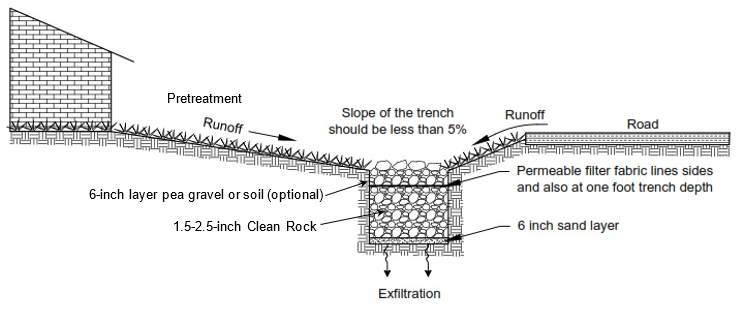
An infiltration trench is a gravel-filled trench that collects stormwater runoff from impervious surfaces, temporarily storing it in the stone’s void spaces and allowing it to slowly seep, or infiltrate, into the surrounding soil. The trench manages runoff, recharges groundwater and filters pollutants like sediment.
Requirements:
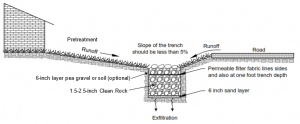
- Water should sheet flow across a grassy area before entering the trench. Avoid concentrated flows that could increase erosion.
- The trench should be at least three feet deep and lined with permeable filter fabric.
- Rock should be clean, with a 1.5- to 2.5-inch diameter (no limestone or shale).
- A layer of permeable filter fabric approximately six inches below the surface to prevent sediment from settling down in the pore spaces.
- Pea gravel or soil may be substituted for the top six inches above the filter fabric (optional).
- Observation well (optional).
- No perforated pipe.
- Grass clippings, leaves and sediment should be removed from the surface of the trench periodically for maintenance
Overland Park will reimburse 50 percent of the cost, up to $1,000.
- Native Tree Plantings
Native trees help reduce the amount of water runoff by taking up water from the soil through their roots. Compared to non-native trees, native trees are better adapted to our climate and require minimal maintenance, including water and fertilizer.
Overland Park will cover 50 percent of the cost of native tree plantings, up to $150 per tree (limit of two). Trees must be included on this list to qualify for the city’s cost share program.
- Native Buffers
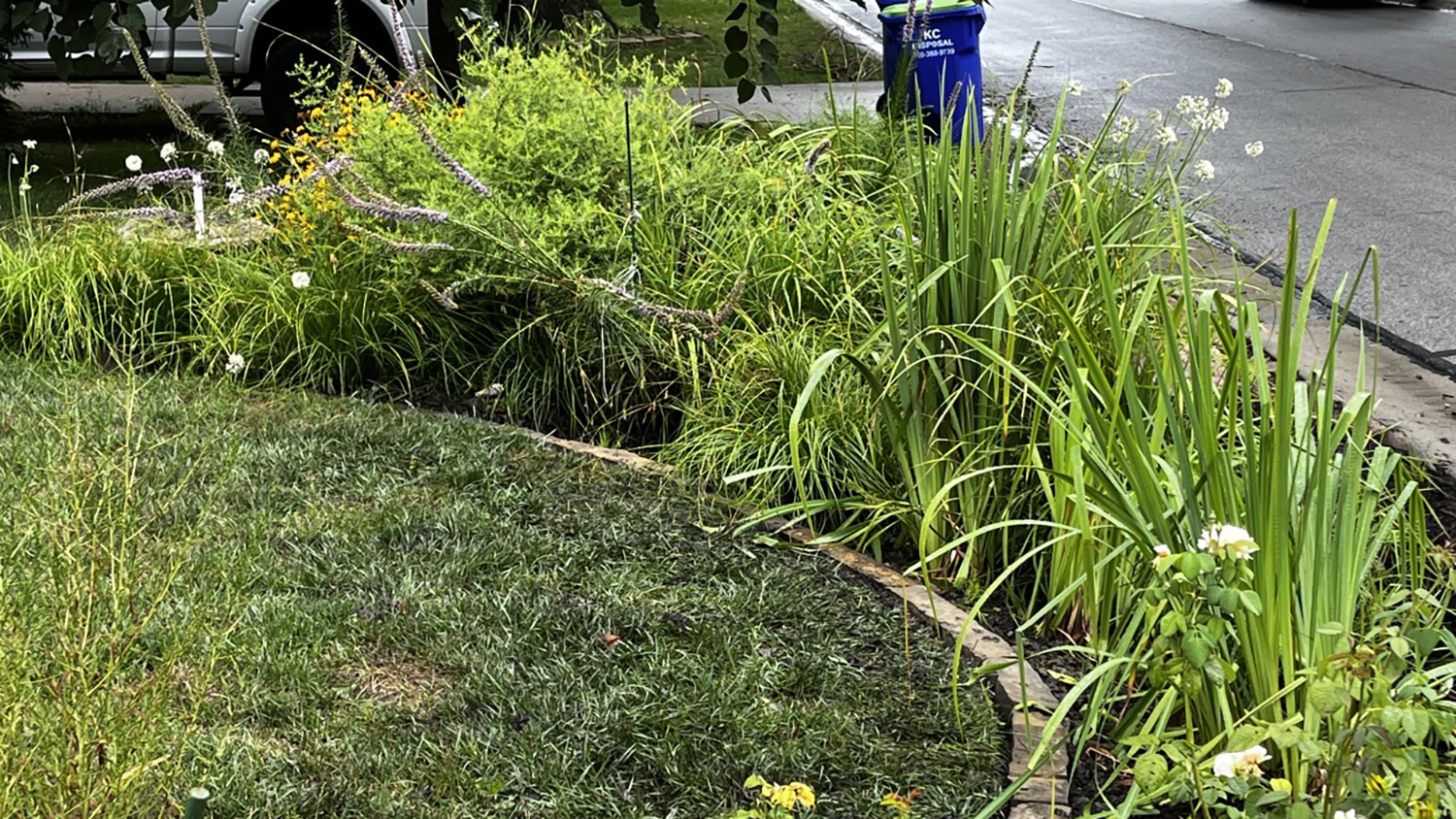
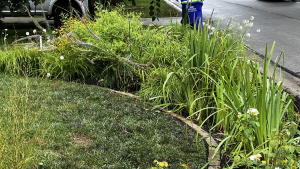 Buffer strips, sometimes called filter strips or biofilters, are gently sloped areas of vegetation and landscaping installed between or at the edge of impervious surfaces and turf areas. Stormwater runoff from sidewalks, driveways and streets, and irrigation overspray from turf areas is captured and filtered through vegetated buffer strips instead of draining onto the street.
Buffer strips are most effective when planted with drought-tolerant vegetation that requires minimal watering. They should be installed over soils that have adequate infiltration rates.
Overland Park will cover 50 percent of the cost of native buffers, up to $1,000.
- Permeable Pavement
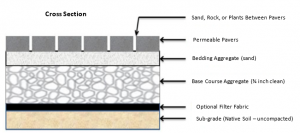
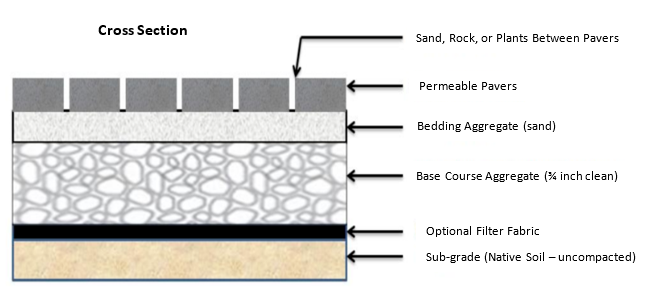
Permeable pavement is a porous surface that catches precipitation, allowing it to slowly infiltrate into the soil.
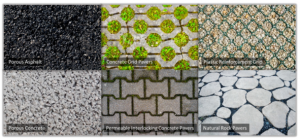
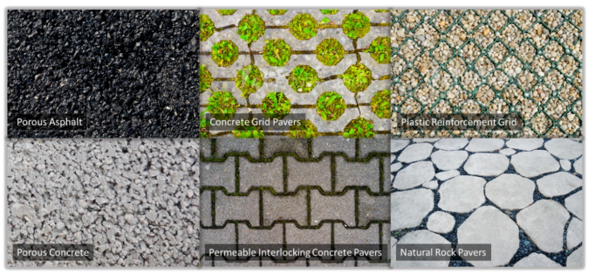
Types of permeable pavement include:
- Porous asphalt
- Concrete grid pavers
- Plastic reinforcement grid
- Porous concrete
- Permeable interlocking concrete pavers
- Natural rock pavers
Permeable pavement should be used in areas that would otherwise be covered with an impermeable surface to be included in the cost share program.
Overland Park will cover 50 percent of the cost of permeable pavement, up to $1000.
- Pollinator Garden
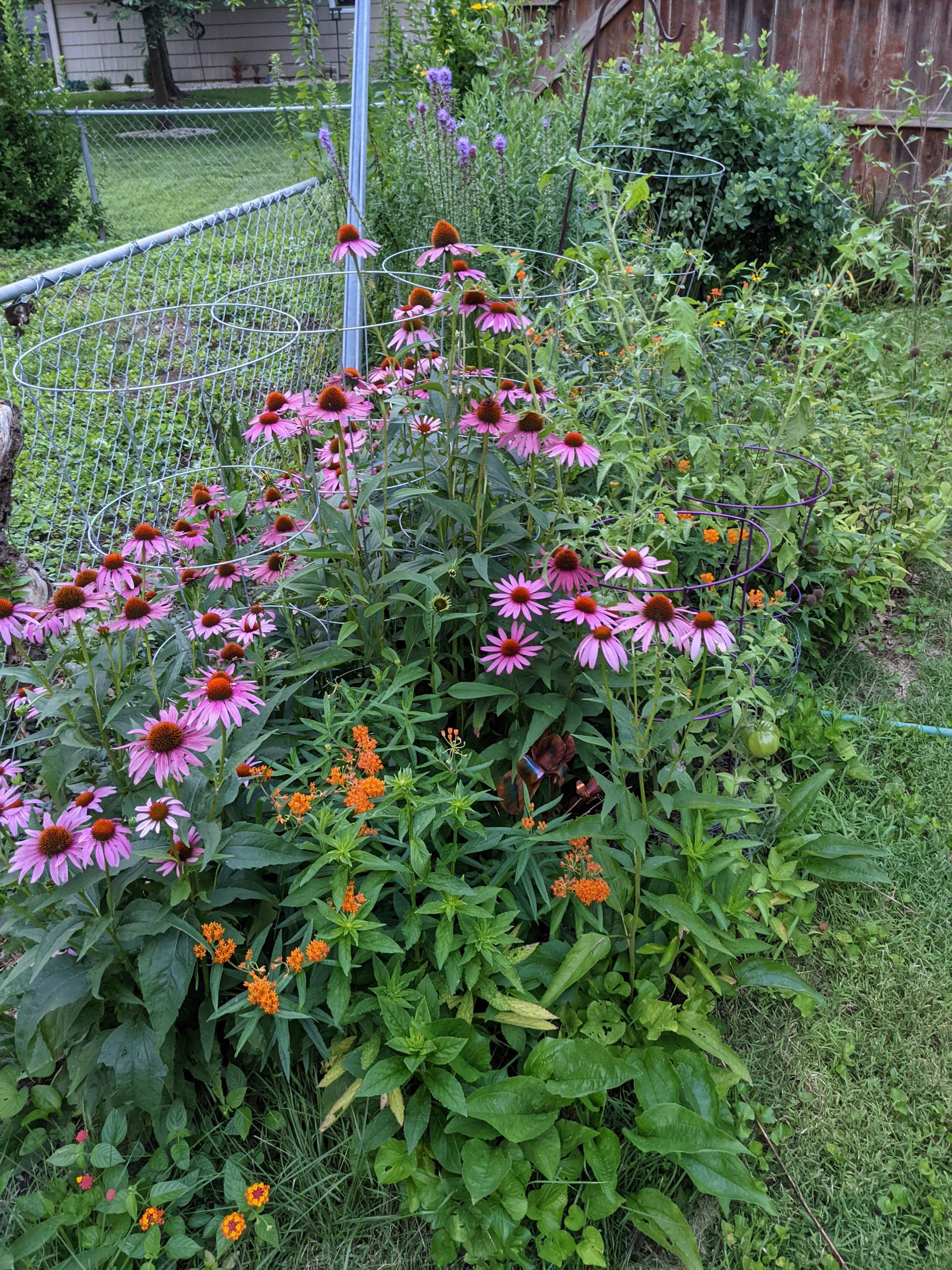
Planting native landscaping reduces the amount of surface runoff that flows into our waterways. It helps rain infiltrate into the ground slowly to recharge streams, lakes, and wetlands at a more natural pace.
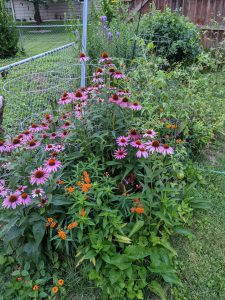
Stormwater runoff that flows through native landscapes is filtered, and contaminants are removed by plants and soil, results in cleaner, safer water.
Overland Park will cover 50 percent of the cost of a rain or pollinator garden, up to $500.
- Rain Barrels
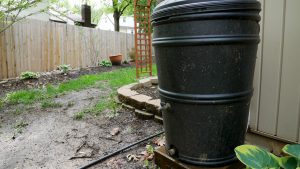
Rain barrels may be up to 200-gallon barrels that capture water that would otherwise go down storm sewers. They can help divert and collect water from around your foundation to reduce foundation or flooding issues. The water collected may be used to water trees, flowers, gardens, etc.
Cover any openings with a screen to prevent mosquitoes from reproducing in the standing water. Rain barrels should also be drained and cleaned in the fall to keep water from freezing in the barrel.
Rain barrels can be incorporated into your landscaping by planting or screening around the barrel. They are subject to applicable laws, including, but not limited to, the city property maintenance codes.
Overland Park will cover 50 percent of the cost of a rain barrel, up to $75 per barrel (limit of two).
- Rain Garden
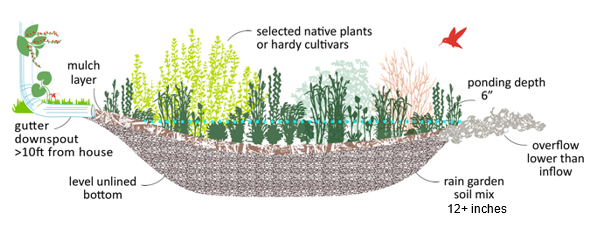
A rain garden is a shallow, landscaped basin designed to capture and absorb stormwater runoff. By using a mix of mulch and hardy woody and herbaceous plants, these gardens facilitate natural infiltration. To ensure success and minimize maintenance, plants should be selected for their ability to tolerate both wet and dry conditions, and the basin should fully drain within 48 hours of a rain event.
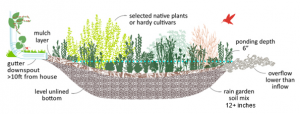
Requirements:
- Ponding depth should not exceed six inches.
- Should be placed 10+ feet away from building foundation.
- A minimum of 12 inches of soil depth should be amended with compost at a 1:1 native soil/compost ratio.
- Should have a designed overflow.
- The mulch layer should be three inches to control weeds.
Overland Park will reimburse 50 percent of the cost, up to $1,000.
- Riparian Plants
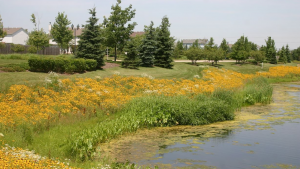
Vegetated strips of native plants along the edges of water bodies. They protect water quality and habitat by filtering pollutants, stabilizing banks against erosion, and providing wildlife corridors and food sources.
Overland Park will reimburse 50 percent of the cost, up to $1,000.
- Rain Cisterns
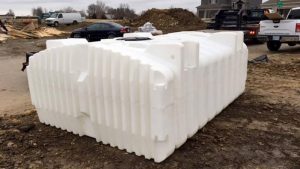 Rain cisterns are water collection systems installed above or below ground, typically collecting 200+ gallons. Overland Park will cover 50 percent of the cost of a rain cistern, up to $500.
- Swales
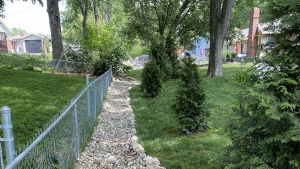
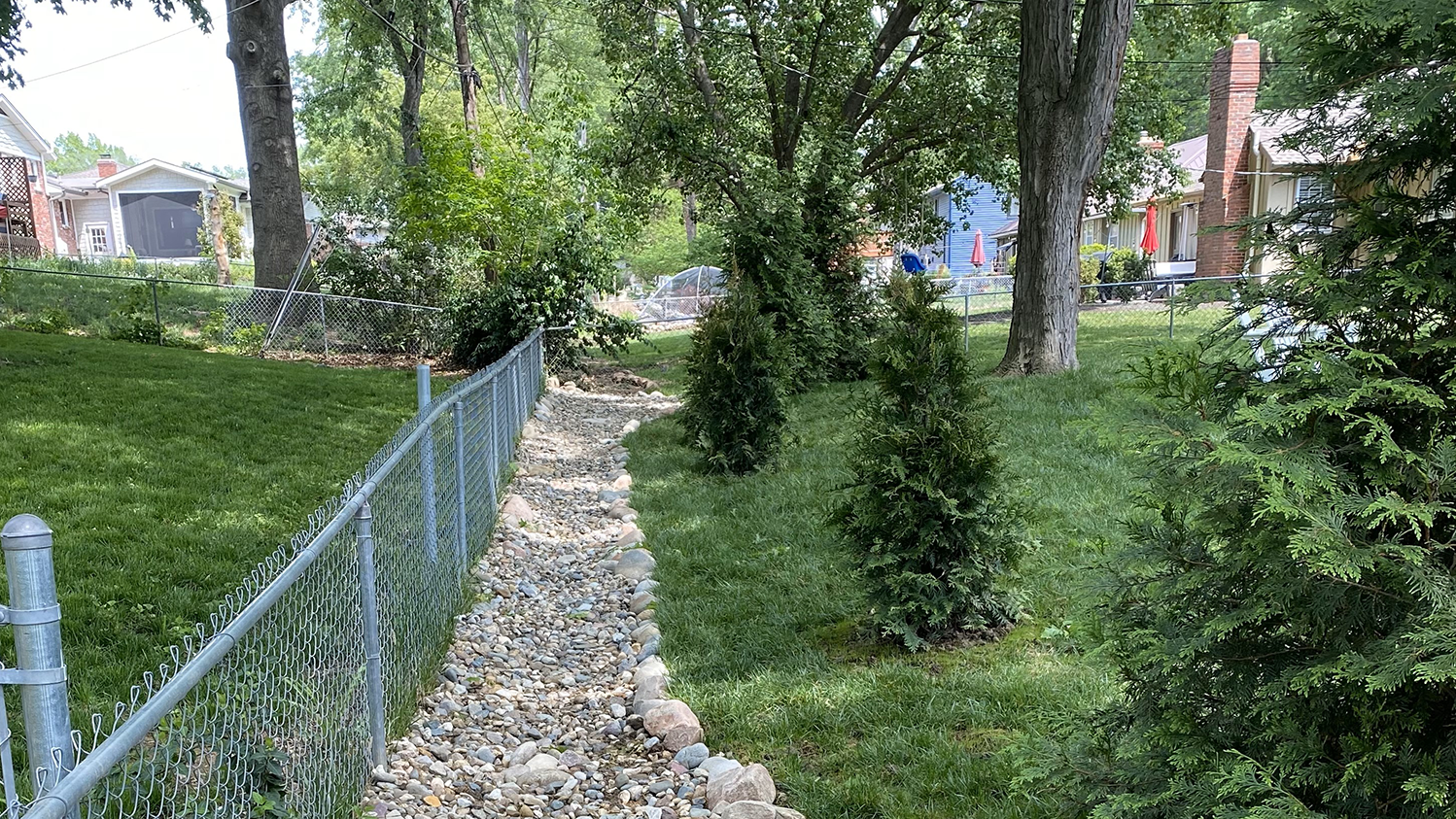
Swales are shallow, gently sloped open channels that slow down runoff, filter out stormwater pollutants and allow some infiltration to occur. They can be designed as vegetation, rock, or a combination and are used to convey stormwater runoff in place of pipes or ditches. As water flows along the swale, it is slowed down by the plants and the roughness of the landscaped surface. This allows sediments and pollutants to drop out and be processed by the plants and soil. Some stormwater soaks into the soil and is used by plants, and, depending on existing soil conditions, some stormwater infiltrates and provides groundwater recharge. Some water continues to flow downhill in the swale, but at a slower rate and sometimes at a lower volume than would flow through conventional storm pipes.
Overland Park will cover 50 percent of the cost of native swales, up to $1,000.
- Terracing
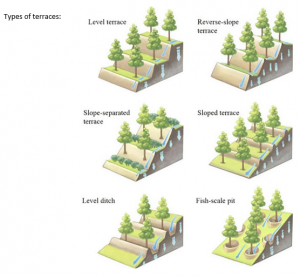
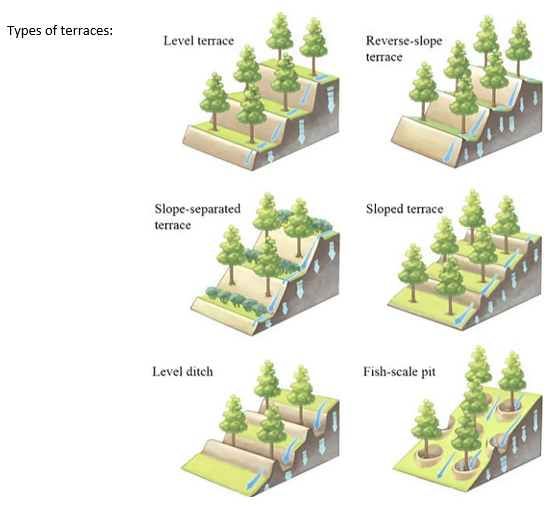
Terracing can reduce soil loss by 50% or more by breaking one long slope into several shorter, flatter sections.
Requirements: Use to correct problems caused by erosion and provide evidence of the problem to be resolved.
Overland Park will reimburse 50 percent of the cost, up to $500.
Stormwater Cost Share Project Map
To see examples of completed projects, check out the interactive project map.
Please note: The map shows properties with previously completed projects, but it does not grant permission to access them. Please do not trespass on private property.
City Ordinances
City ordinances cover various elements related to Stormwater Cost Share projects, including but not limited to the following:
Stormwater FAQs
- What is stormwater?
Stormwater is the water that is generated when rain, snow melt, and surface drainage flows over land or impervious surfaces and does not percolate into the ground. Impervious surfaces are defined as hard surfaces where water is unable to soak or infiltrate into the ground, such as streets, parking lots, sidewalks, and rooftops.
- Where does stormwater go?
As stormwater flows over land and impervious surfaces, it picks up sediment, contaminants, trash, nutrients, and other pollutants which then end up in the waterways of Overland Park untreated. Unmanaged stormwater adversely affects these waterways by causing water pollution, stream bank erosion, and flooding.
- What can I do?
By capturing stormwater close to its source, slowing it down, and/or allowing it to be soaked up by plants and soil, pollutants and sediment are removed. This helps improve the water quality of our streams, creeks, and ponds as well as downstream in the Kansas and Missouri rivers.
- Can cultivars be planted using the Cost Share Program?
Nativars are okay to use in the Cost Share Program, cultivars are not. Please refer to the native plant list on the OP website for acceptable plants.
Overland Park strives to promote true native plants as research has shown they best serve the goals of promoting water quality, reducing the use of resources, and providing resources for native pollinators.
Many native plants have been manipulated to change or enhance certain qualities such as color or size. These are called ‘cultivars’ or ‘nativars’ (cultivars of native plants). The key to knowing if you have a cultivar or nativar is to look for the scientific name on the plant tag. True natives will just be the two word scientific name (Purple Coneflower is Echinacea purpurea). Cultivars/nativars will have a common name in single quotations or an “X” indicating what was crossed. For example, a common nativar of coneflower is Echinacea purpurea ‘Bright Star’. A cultivar may be written Echinacea ‘Daydream’ or Echinacea purpurea x laevigata. Both of these indicate a cross between two species – the first leaves off the species information, the second tells you which species were crossed.
You can learn more about the differences in this webinar from the Missouri Prairie Foundation.
Please reach out for assistance.
Julie Roberts / [email protected]
Cloey Adrian / [email protected]
Related Links
Civil Engineering Stormwater Resources
See the city’s stormwater management requirements for public projects.
Contain the Rain
Contain the Rain is a Johnson County program and a regional resource for sustainable landscaping solutions that benefit stormwater management efforts.
Planting Natives in Kansas City Metro
View native plant information and tips from the Master Gardeners of Johnson County.