Karen's Path
Karen’s path is a 0.3-mile, end-to-end, natural hiking loop, featuring views of Wolf Creek, a native grass meadow, lower woodlands and a stunning Sycamore Grove.

The Overland Park Arboretum & Botanical Gardens offers ten miles of trails, including wood chip hiking trails, paved paths and more challenging dirt trails.
The garden’s trails and walkways offer benches for breaks throughout the gardens, while the trails and prairie are more rugged. Visitors exploring trails south of Wolf Creek should bring water, a map, and extra time, as many find these trails both enjoyable and challenging.
We also welcome leashed pets on the trails and prairie, accessible through the East Kiosk Entrance.
8909 W. 179th Street
Overland Park, KS 66013
913-685-3604
September - March
Monday-Sunday | 9 a.m.-5 p.m.
April - August
Monday, Wednesday, Friday, Saturday, Sunday | 9 a.m.-5 p.m.
Tuesday, Thursday | 9 a.m.-8 p.m.
Last entry 30 minutes before closing.
Gates shut at closing time.
Children ages 5 and under are free.
$3 ages 6-17
$7 ages 18+
Free admission on the first Tuesday of each month.
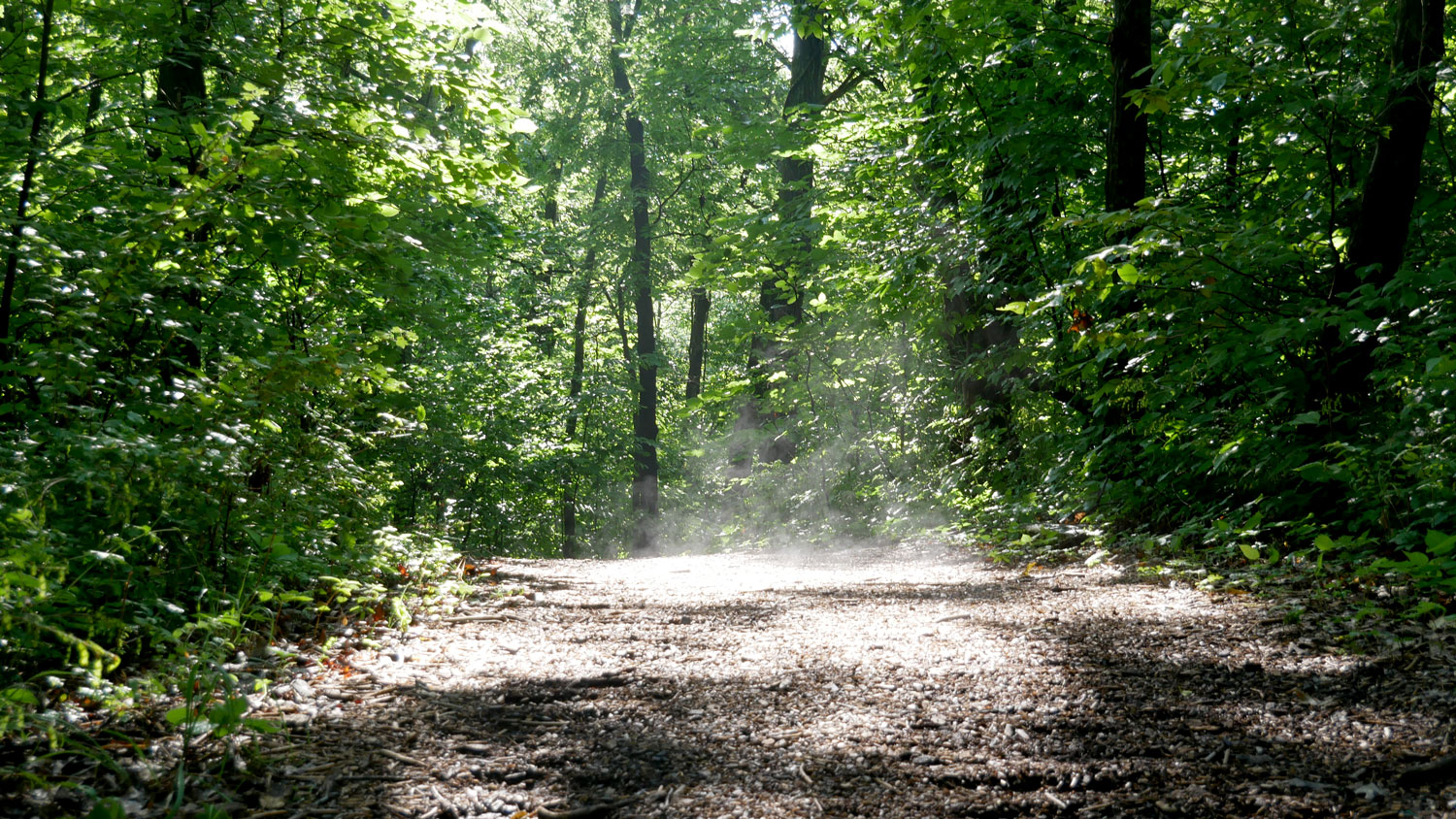
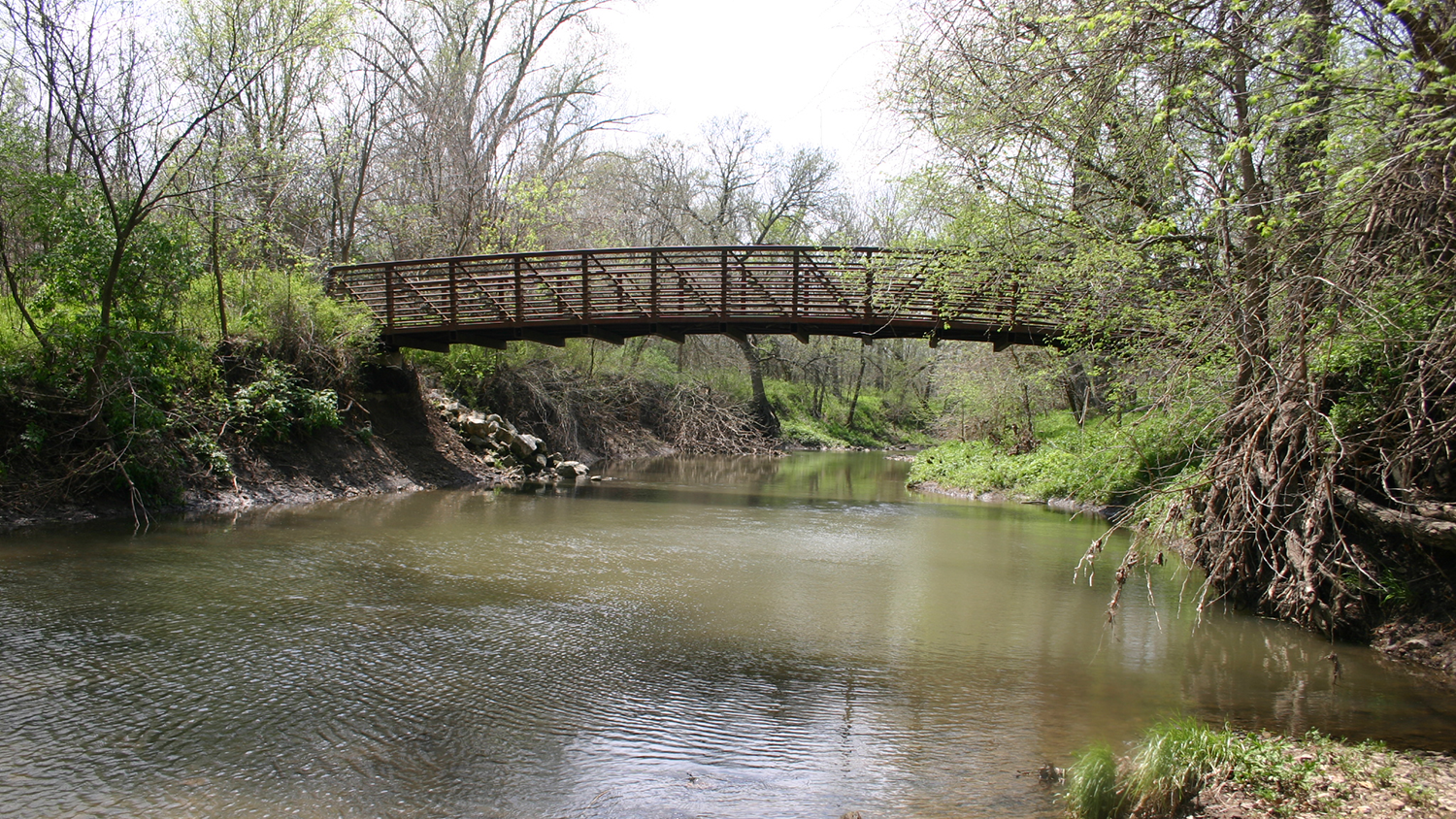
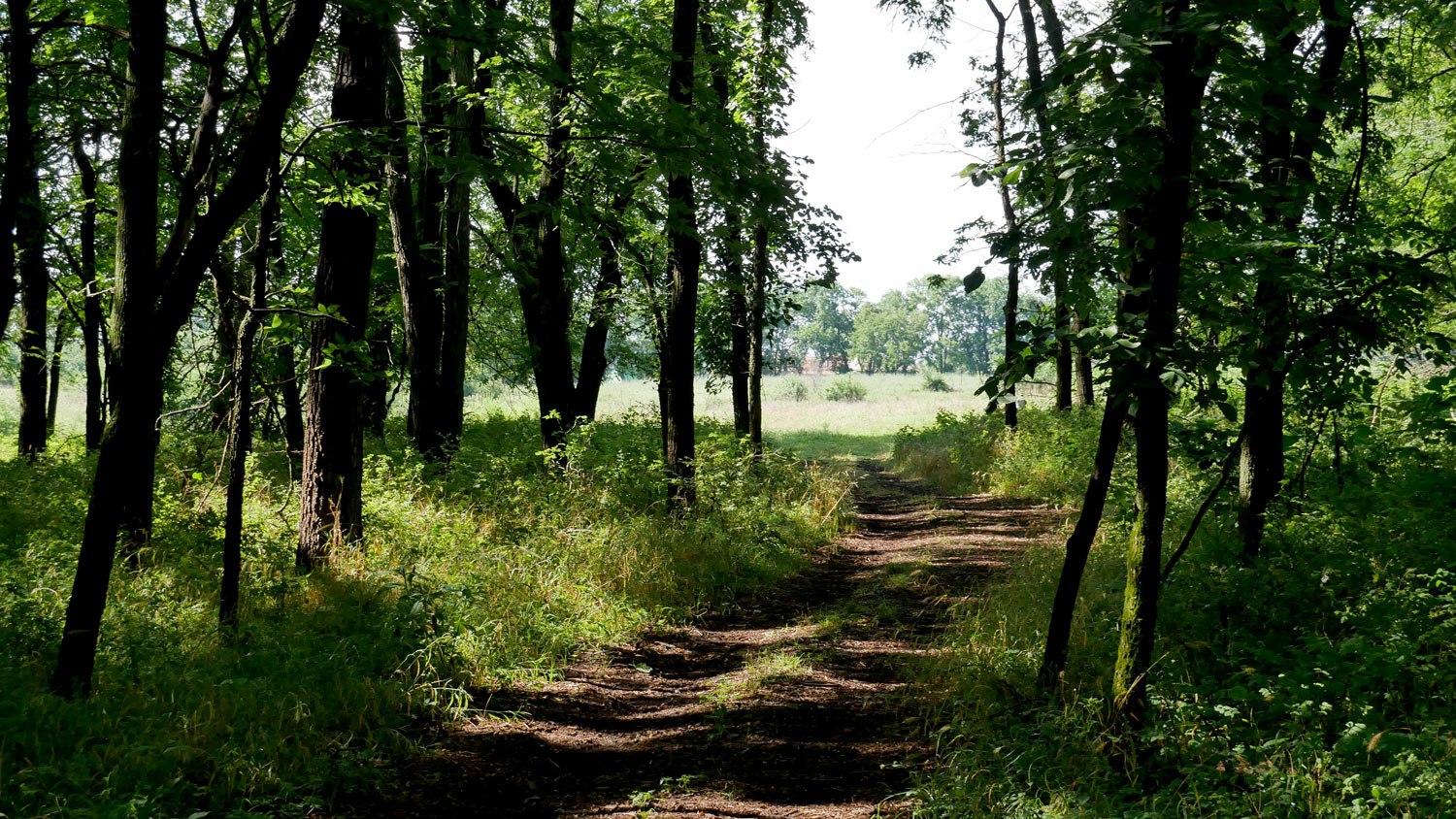
Each trail showcases a wide variety of tree species, native woodland plants and unique vegetation.
Karen’s path is a 0.3-mile, end-to-end, natural hiking loop, featuring views of Wolf Creek, a native grass meadow, lower woodlands and a stunning Sycamore Grove.
The cottonwood trail is a 0.3-mile, end-to-end, mulched trail with a gradual slope. This trail is named for the towering cottonwood trees near the east bridge. The trail also features a birdwatching area just off the western section.
The sculpture garden trail features a half-mile asphalt loop with subtle elevation changes. Along the loop, you can find many of our garden sculptures.
The west trail is a 1.3-mile natural hiking trail that will have you hike on gravel, mulch and natural rock and dirt paths as you pass the north bank of Wolf Creek. Keep your eyes and ears open as many of our friendly woodland creatures can be found along this trail.
The bluff loop trail is a one-mile natural hiking loop with stunning limestone bluffs and mossy rock landscapes. The southern section of the trail features natural rock crossings and single-track hiking. The northern section is a little less strenuous, offering panoramic views of Wolf Creek as the trail winds along it.
The rocky ridge trail offers a one-mile, end-to-end trek with several steep sections through the upper woodlands, passing limestone bluffs with rock fissures along a natural gorge. Along the two southernmost points, you will cross footbridges over meandering streams before reaching our prairie.
The Whitetail Pass is a 1.3-mile natural hiking trail consisting of gradual slopes and natural rock crossings over streamways. This trail offers unparalleled views of Wolf Creek and western limestone bluffs as you wind through narrow forested sections.
The 2.5-mile prairie loop offers a mixture of natural path, gravel and mowed grass. The loop features rolling hills, flat stretches and beautiful skyline views. Native prickly pear cactus and local wildlife can all be found in the area.
The dry oak-hickory forest is a common ecosystem for this area, as well as for much of eastern and central North America. This ecosystem contains Post Oak, Black Oak and Shagbark Hickory trees as dominant species as well as rock outcroppings and rock layers at the surface. Dry Oak Hickory trees are examples of deciduous trees, meaning they lose their leaves every fall and winter and grow all new leaves in the spring.
Interesting Facts:
Riparian woodland ecosystems are areas along bodies of water that exist in the areas between water and land ecosystems. Woodland streambanks remove excess nutrients and sediment from surface runoff, helping to keep Kansas waters clean. The Arboretum’s Riparian Woodland ecosystem lies in the floodplain created by Wolf Creek. Floodplains are low areas next to streams and rivers that are created as the moving water erodes the stream banks over time. Flooding is visible and the soil is completely soaked at various times of the year. The Arboretum has experienced flooding events along Wolf Creek, usually about twice a decade.
Interesting Facts:
A dry-mesic prairie is a special grassy area with native Kansas grasses located on flat or slightly sloping land. Much of the Arboretum was originally prairie. Primarily located in temperate climates, prairies are big fields consisting of mostly grass instead of trees. The northeast entrance of the Arboretum and around Margaret’s Pond were once prairie, prior to the land being farmed. People plowed the land, grazed animals, and planted crops, so some plants that aren’t native to the area are currently growing there.
Since 2002, volunteers and Arboretum staff have been returning these old plowed field acres to their original natural prairie condition. The prairie is managed by a three-year rotation of reseeding, cutting, and burning to simulate grazing by wildlife and buffalo and mimic wildfires regularly burning the prairie.
Interesting Facts:
A Woodland ecosystem is a wooded area where the treetops hide 30 to 100 percent of the sky overhead. Breaks in the canopy allow sunlight to penetrate between the trees, reducing ground shade. A greater amount of available light reaching the ground means the ground is dense with trees and shrubs, climbers, perennial herbs, bulbs, grasses, sedges, mosses, and lichens. Canopy trees have large, spreading crowns, especially in more open, dry areas. No other local ecosystem contains such a wide range of plants as a Woodland ecosystem.
Interesting Facts:
A Mesic ecosystem retains moisture most of the year. This forest is dominated by a mixture of oak and hickory trees, with white oak being the most common. Red oak, black oak and mockernut hickory trees are also found in this ecosystem.
Interesting Facts:
A Wooded Draw ecosystem is a wooded ecosystem that has a natural drainage feature, carrying water from higher to lower areas. It contains steep-sided channels or gullies formed by soil washing away. Draws are often associated with forest, grassland, and desert ecosystems.
Interesting Facts:
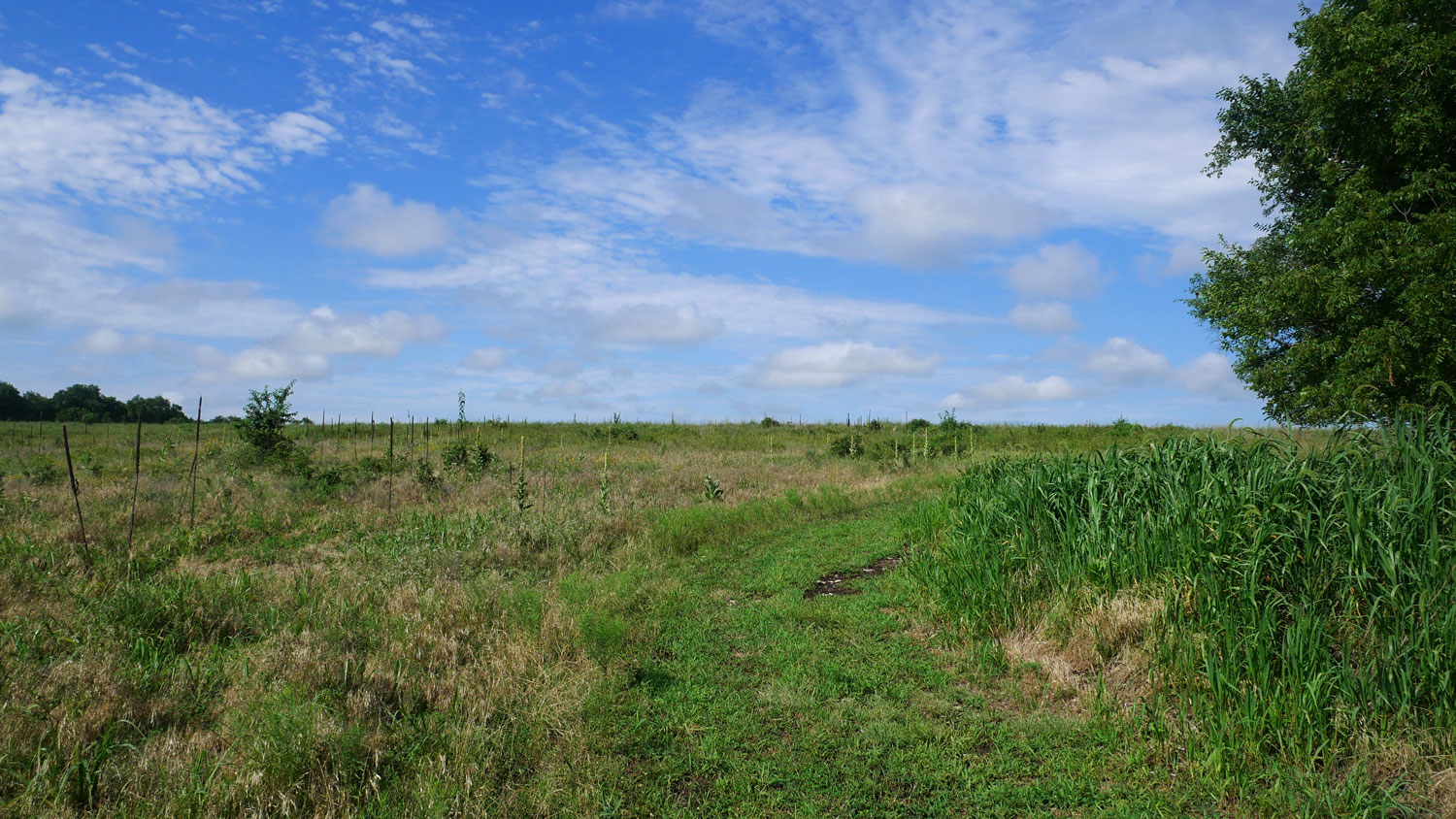
Visitors can take the bluff loop and rocky ridge trails onto the prairie, where they may explore the beautiful landscaping on or off of the paths.
In addition to the rolling fields of big and little bluestem, switchgrass, prickly pear cactus and various native wildflowers, areas of interest on the Arboretum prairie include the old duck pond, two waterfalls, a cedar grove and a bluff overlook of Wolf Creek.
Arboretum staff and volunteers manage the prairie with a three-year rotation of reseeding, haying and burning to simulate grazing by wildlife and wildfire burning of the prairie.