
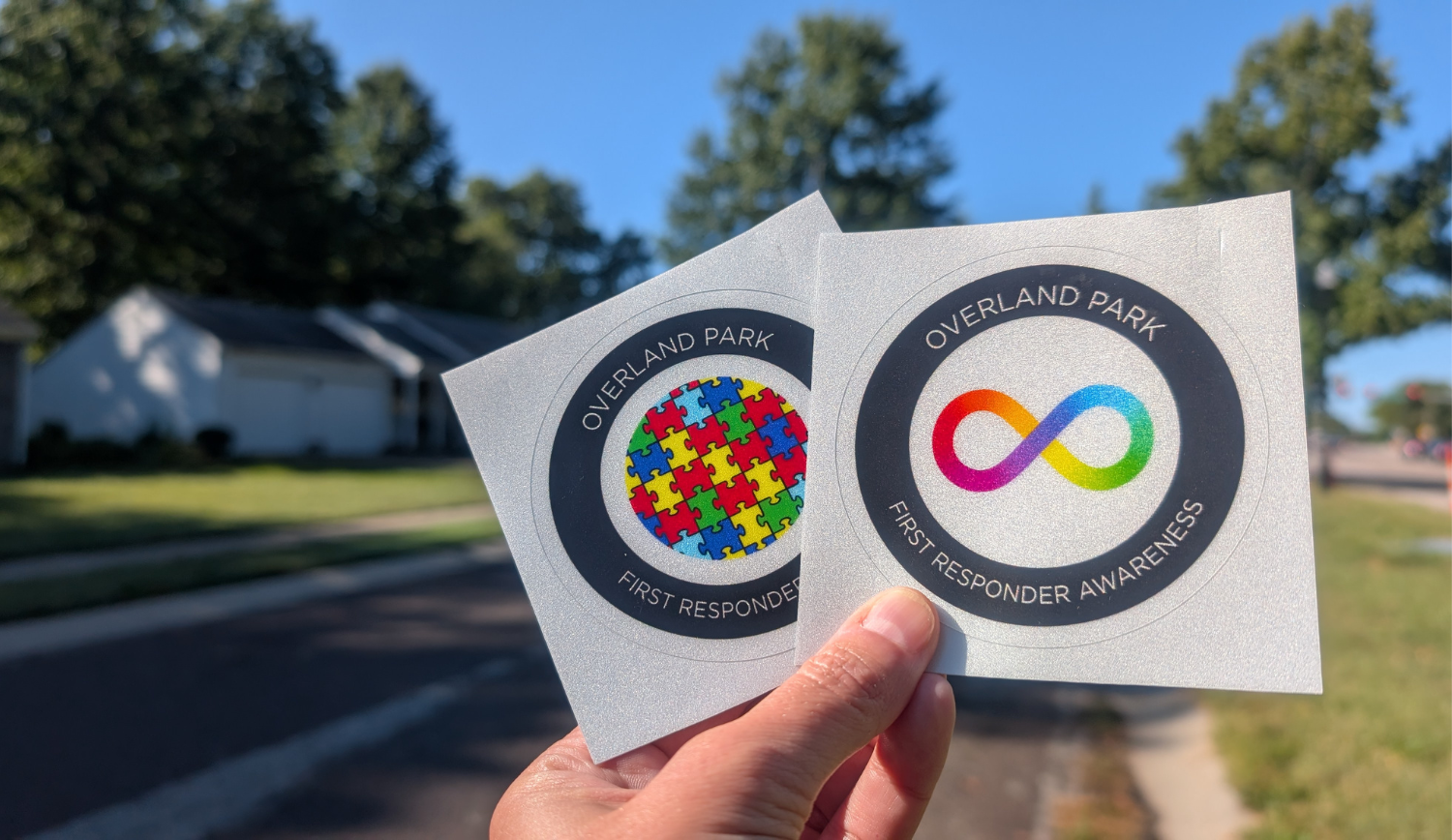
The Overland Park Police Department is proud to announce the launch of a new community-focused program to improve interactions between first responders and community members with developmental disabilities, mental health needs, or other sensitive concerns.
The program aims to improve communications between first responders and the community, providing practical resources to help officers, firefighters, and medical personnel quickly identify and respond appropriately to community members who may require a different approach during an interaction.
“Our officers are often the first point of contact during a crisis, and having these tools will help us better understand and support our residents,” said Overland Park Police Chief Doreen Jokerst. “This program aims to provide our officers with as much information as possible in order to be sensitive to our residents’ needs and improve our interactions with the community. I hope parents, families and neighbors will take advantage.”
The First Responder Awareness program provides resources for families and individuals to use when interacting with the police, firefighters and medical personnel. They include:
- Awareness decals, to be placed at the front door of a home, featuring two well-known symbols representing developmental disabilities.
- Blue envelopes, to store important documents and keep inside vehicles for communicating with officers.
- Johnson County Mental Health Center information cards to provide information about the type of support that can be helpful to the carrier and contact information for loved ones.
The Overland Park Police Department, Overland Park Fire Department and Johnson County Med-Act have trained staff to understand the purpose of these resources. Other first responder agencies will use the program as well, including:
- Spring Hill Police Department
- Prairie Village Police Department
- Olathe Police Department
- Gardner Police Department
- Westwood Police Department
Officers recognizing these symbols may take extra steps to speak more calmly, avoid abrupt movements, bright lights and sources of overstimulation during an interaction with a community member. They will be more aware that a person might react with sudden, unpredictable movement, may not make eye contact and may not respond verbally.
The program is completely voluntary. The decals, envelopes and cards are available for free at the Myron E. Scafe Building, 8500 Antioch Road; and Sanders Justice Center, 12400 Foster St.